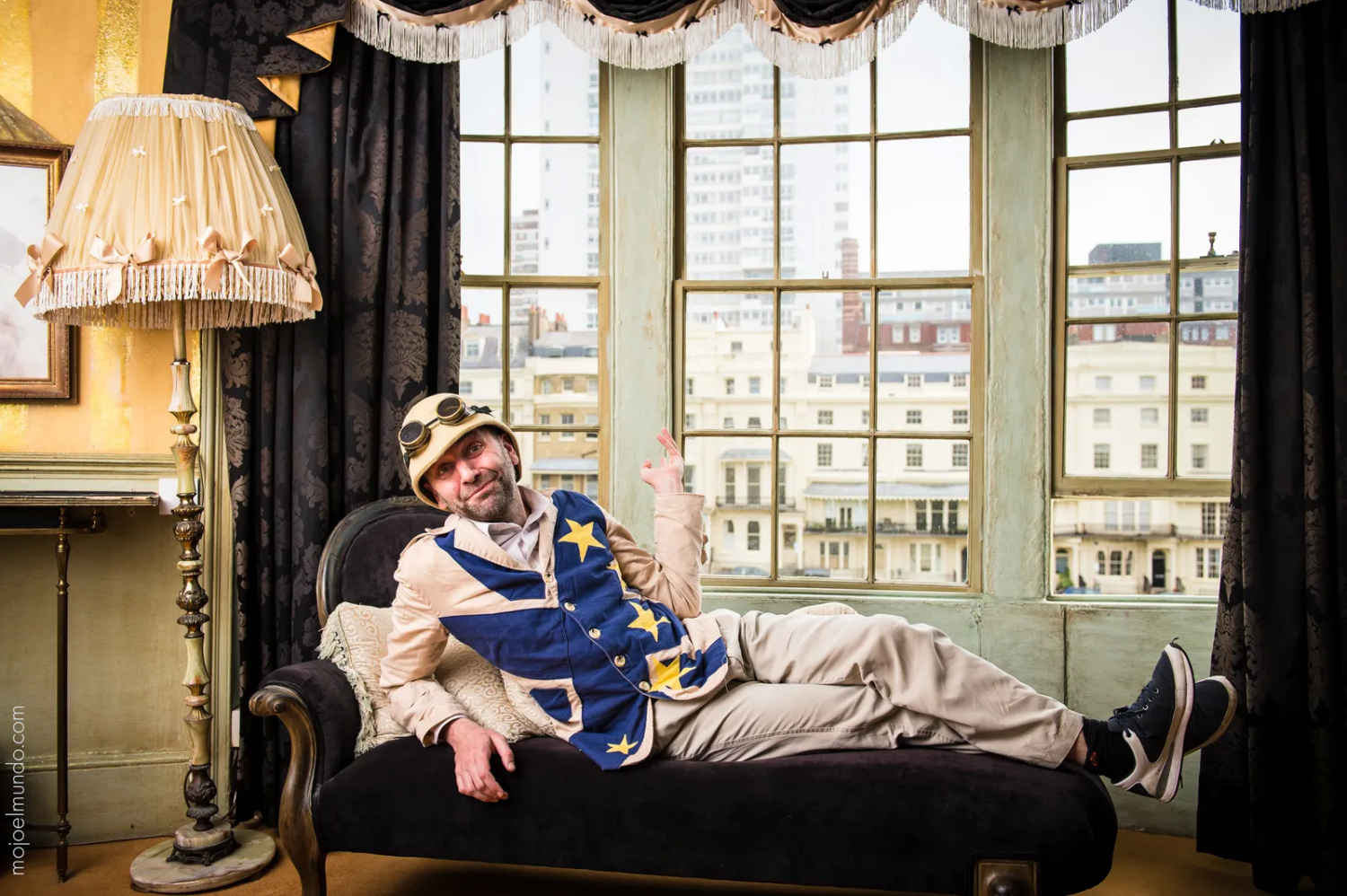
There is a moat, in one of his songs, filled entirely with tea. This tells you most of what you need to know about Professor Elemental, though not quite everything, because the moat is imaginary and the tea, one suspects, would be too strong.
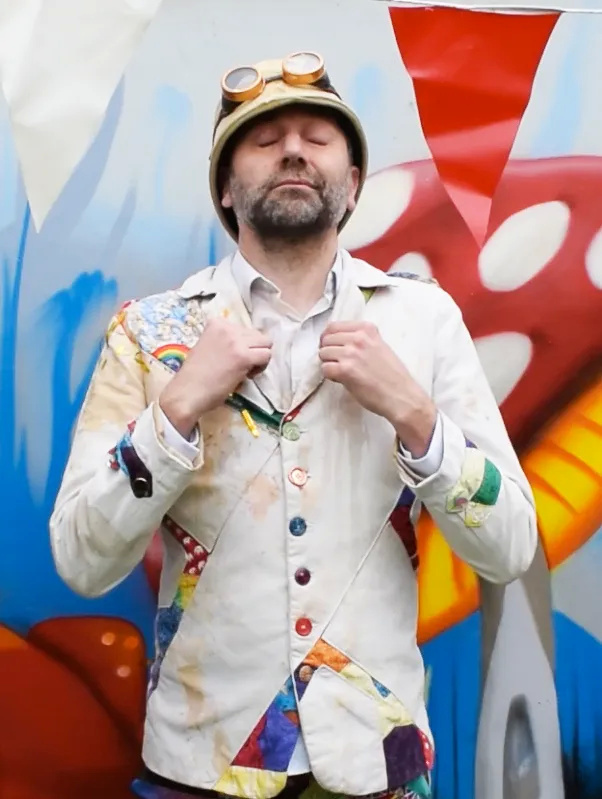
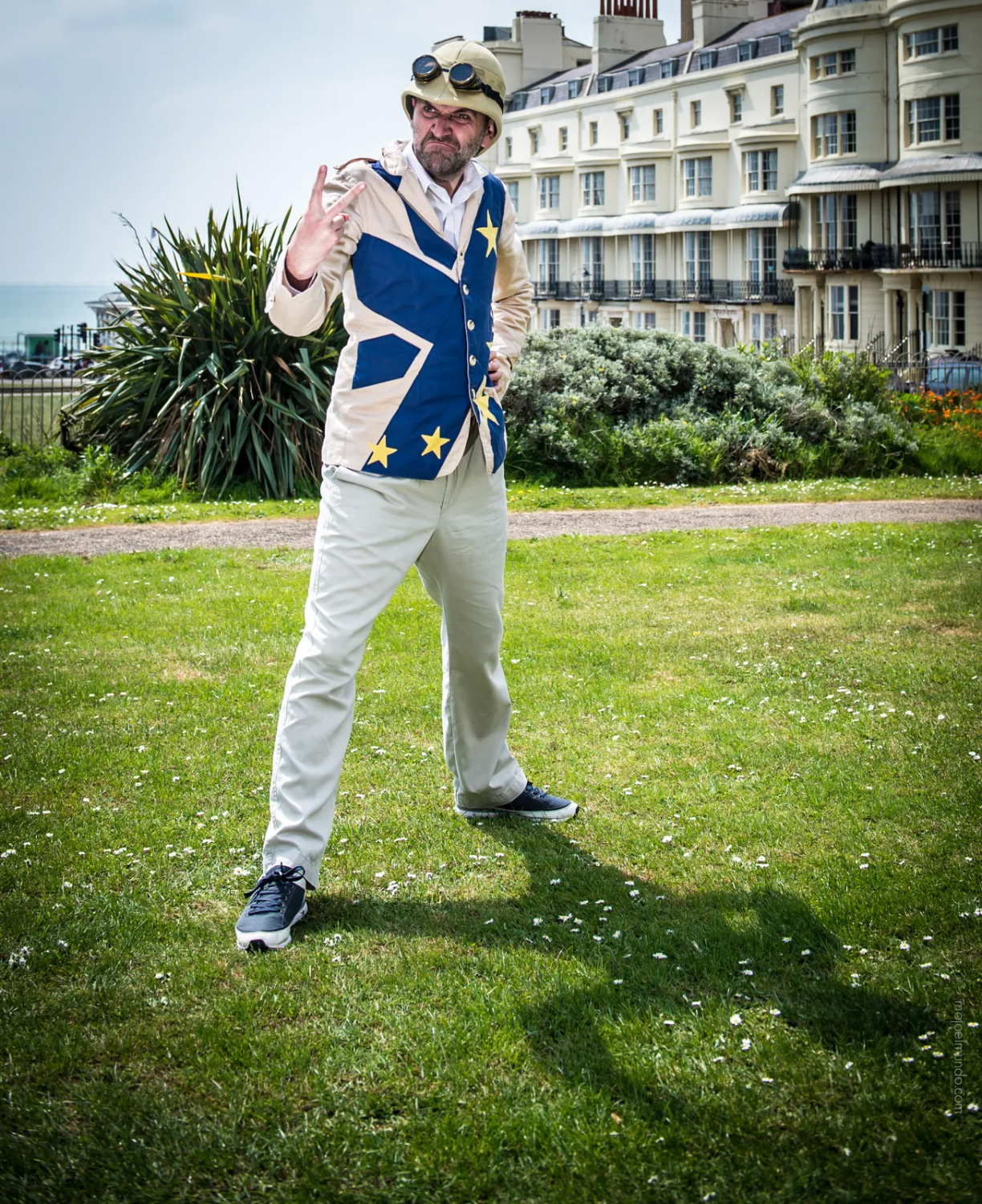
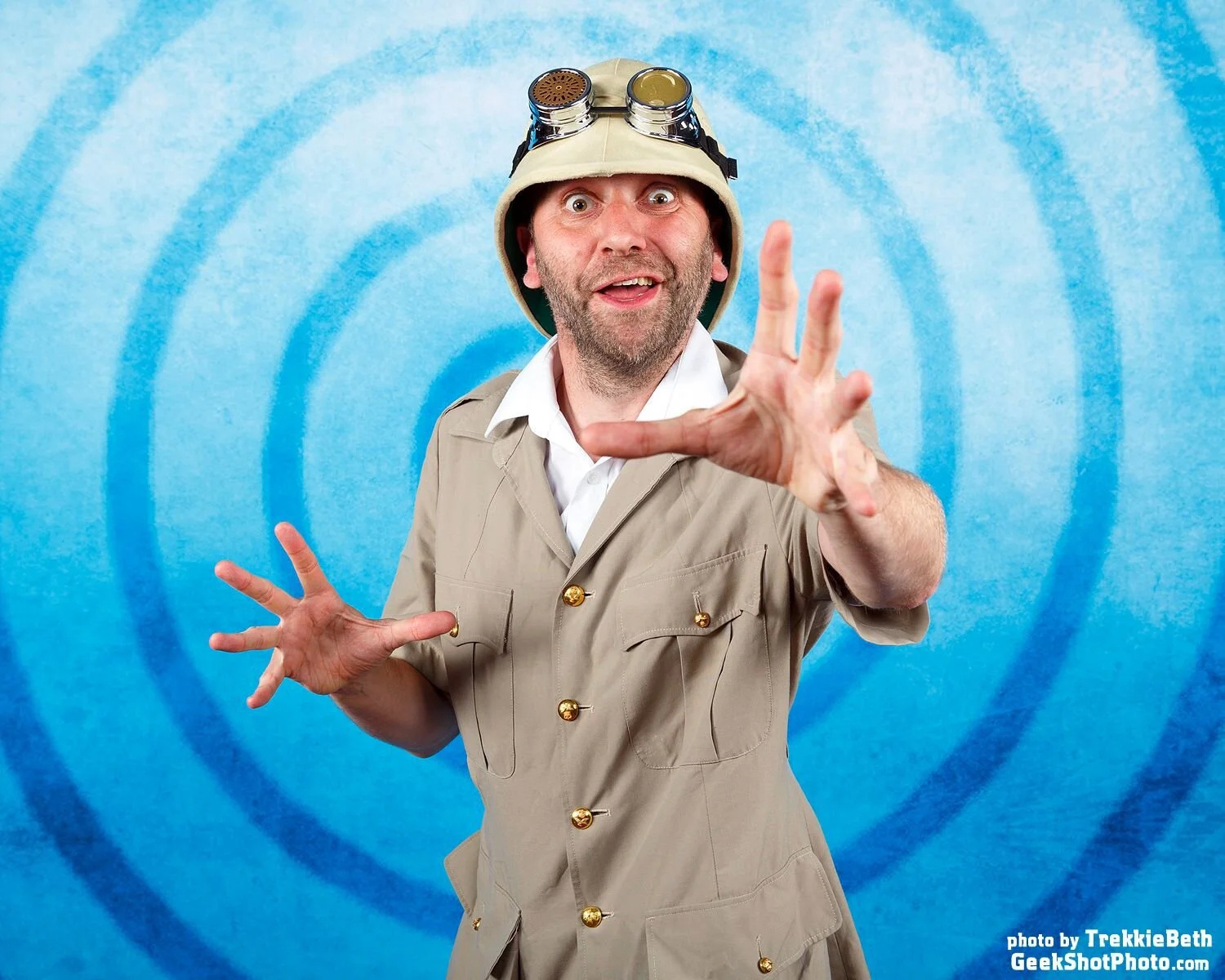
Beneath the pith helmet and the safari suit is Paul Alborough, born in Ipswich in 1975, now resident in Brighton, and by his own boast "completely unemployable" - a man who gave a decade to low-level call centres, collected more sackings than he cares to count, and then decided, sensibly, that the world of 'real jobs' could manage without him. The character that set him loose was, fittingly, an accident. He and the producer Tom Caruana set out to make a concept album imagining how rap might have sounded in different periods of history. They spent a very silly night, a good deal of it apparently up a tree, and got as far as the Victorian track before abandoning the rest. The album was never released. The Victorian gentleman stayed.
He arrived properly in 2008, in the video for "Cup of Brown Joy" - an ode to tea in all its forms (herbal excepted, thank you very much) that Alborough knocked out in a single take while Caruana was out of the room, intending it as a throwaway. It went, in the language of a later century, viral.
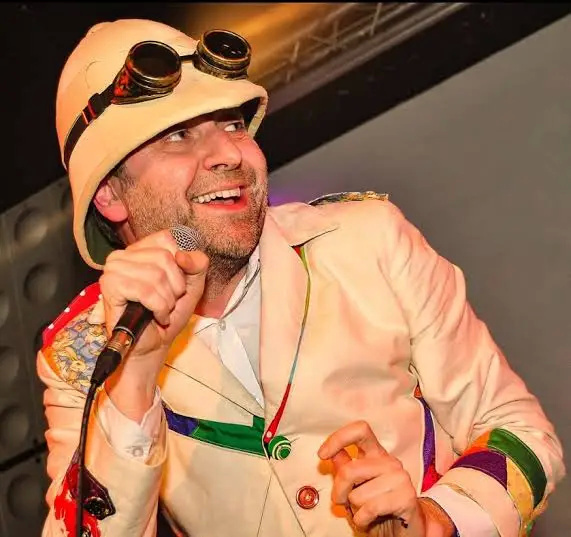
"Fighting Trousers" followed, a gleeful diss track aimed at his friend and rival Mr B The Gentleman Rhymer, and with it a genre had a face: chap-hop, hip-hop performed in received pronunciation by a man with an orangutan butler named Geoffrey and a fondness for gluing different wild animals together.
Since then the Professor has become an unlikely institution. He has released a shelf's worth of albums, written books and comics, feuded and reconciled in rhyme, and - this is the Hollywood part - lent his voice to Disney, appearing as himself in the "Steampunx" episode of Phineas and Ferb and turning up in Penn Zero: Part-Time Hero, as well as the cult American web series The League of S.T.E.A.M. His own crowdfunded short film, The Chronicles of Professor Elemental, sent him in search of a golden frog. He has performed everywhere from Cambodian jungles to Wild West towns, and was named the Eccentric Club's Greatest British Eccentric Artist of 2012.
Even NBC's Today joined the fray, sending its celebrated correspondent Meredith Vieira across the Atlantic to meet the "Greatest British Eccentric" and settle matters, as one does, over a biscuit-dunking duel and a pot of tea.
We asked him our usual questions. He apologised for taking longer than intended to answer, which is the most Professorial thing imaginable.
Have you always been thought eccentric?
Absolutely. One of the keys to eccentricity is the ability to stop caring what anyone thinks of you, and that's something I worked on from an early age. There was really no one who shared my interests or had any love for my nerdy passions, so I was left to my own devices. Like a lot of nerds I was bullied a bit, and I hate to call it "character building" - but the silver lining was that it showed me how important it is to stand up for the things you love, even if you have to do it alone.
Have you found yourself? Or did you do it your own way?
I'd imagine everyone reading this magazine could attest to that one. My earliest memories are of emptying my grandad's shed of every tool and machine, then using it all to build an imaginary chocolate-biscuit-making machine. Forty years later I'm still basically doing the same thing, only over music, for a living. How incredibly lucky is that?
For all the hardships of making niche music entirely self-sufficiently, there's a great joy in operating outside the usual structures of the industry. I'm creatively free to make whatever I want, however I want. That's the greatest freedom I can imagine.
What drives you?
A healthy fear of ever going back to a real job, for one. I spent a decade in low-level call centres and have been fired from more jobs than I could list here, so I'm proudly, completely unemployable. Which means making a living from music isn't a gamble; it's the only sensible plan I've got, and I go at it with everything. I've a family to support too, so there's always an element of business sense underpinning all the whimsy.
As for the art itself - it's partly a parody of the hip-hop I love dearly, and partly an attempt to make the most joyful, happy music available. Treading the line between parody and originality can be tricky. When you're performing music of Black origin as a white, middle-aged, middle-class man in a pith helmet, to an audience of nerds and steampunks, you have to think very carefully about what you say and how you present yourself. It also makes for some very unique, and hopefully enjoyable, hip-hop.
Is your vision eccentric or traditional?
I don't think it's especially either. There are hundreds of thousands of independent artists making a living, and plenty who want to leave their audience smiling. There's nothing unique in my approach to that.
The most eccentric thing you've done?
The wonderful thing about performing in character is that it opens a gateway to eccentric adventures you couldn't reach any other way. The Professor has taken me to real-life secret speakeasies and Cambodian jungles, Wild West towns and haunted mansions in far-off countries.
That said, no one is eccentric all the time - anyone who claims to be is either faking it or in need of serious help - and the joyful duality of mad professor and suburban dad is truly the best of both worlds. Adventures are wonderful, but they're rather sad if you've no one to come home to.
What do you make of the Eccentric Club?
I love it. I love the concept, the Britishness of it, the people. We haven't had the chance to come along as often as we'd like, but members have appeared in my music videos and been incredibly kind. It's an institution worth preserving and cherishing.
And when did you first hear of it?
I found out online and mentioned it to a few friends. Then I was lucky enough to be nominated and to win the Most Eccentric Artist of 2012 - I was giddy as a goose. The world always needs more silliness and fun, especially these days. It needs communities and institutions that value laughter, invention, self-deprecation and community. The Eccentric Club is all of those things.
How relevant is your art to the modern world?
It's important to a very select audience and largely ignored by the world at large, which is lovely. Mainstream fame always strikes me as rather a miserable affair, and the happiness it brings something of an illusion. A modest living from creativity, with the freedom to do whatever you like all the time, seems to me the key to long-term happiness.
That said, light-hearted art can be undervalued - seen as less worthy than something serious. Whether you're watching a Chuck Jones cartoon or reading a Grant Morrison comic, there's a great deal to be gained. There's much to be learned from the sort of pop art considered less valuable than something hung in a gallery or played by an orchestra.
And despite the general mess, I rather like a lot about our times. Without the internet I'd never have forged a career. But between the growing gulf between rich and poor, the tidal wave of corruption that seems to attend late-stage capitalism, and the cultural division we appear to have caught from the Americans, there's plenty to work on.
If I could change one thing, it would be for more people to see both sides of an argument. The binary notion that you're either utterly virtuous or an absolute bastard is something we've been handed by the sinister algorithms of social media, and it does society no good at all.
Would you use a time machine?
I once spent an entire album building time-travel trousers and visiting various years in history. It was very nice. But there's really no time like the present moment.
Three wishes from a genie.
One: make it legal to eat swans. Two: have someone shoot and prepare me a swan. Three: be presented with a really nice swan sandwich, on granary bread, with mayo and lettuce.
(He adds, by way of apology, that he should perhaps have answered this one somewhere other than a park, and while less peckish.)
And the future?
I very much hope all my projects appeal to the members and ethos of the Eccentric Club, as I keep attempting music that's both inclusive and whimsical. Between books, cartoons, action figures and any number of albums, I always have more projects than I can manage, and more collaborations than is strictly safe.
Professor Elemental's bespoke rap songs - on the subject of your choosing - and his Patreon, which he has built into a flourishing direct line to his fans, can both be found via professorelemental.com. He would like it noted that the swan sandwich remains, for legal reasons, hypothetical.



Comments (0)
No comments yet.
Commenting is for subscribers. Sign in or subscribe to join the conversation.